Listen to the Music of My Musical History

The Early Years

Anyone who knows me probably also knows that music, particularly performing music, has always been an important part of my life. My dad was a musician, part of the time professionally although mostly at church and just for the love of it. I was born in 1947 in Santa Monica, California where my parents had moved from southern Arkansas (Camden) in the late 30’s. Although he worked as a printer, my dad also had a job singing on the radio live (obviously). Dad and mom had the opportunity to move to California where a station had offered him a job. It was in Beverly Hills and they moved to West LA, then bought a house in Santa Monica the year I was born. ​

​Dad had a great baritone voice, but his radio singing career only lasted a couple of years. I think it was a combination of the Second World War impacting radio programming but also many people took jobs in the defense industry, as dad did, while continuing to work as a union printer. He continued to sing and was a centerpiece in many ways at our church.

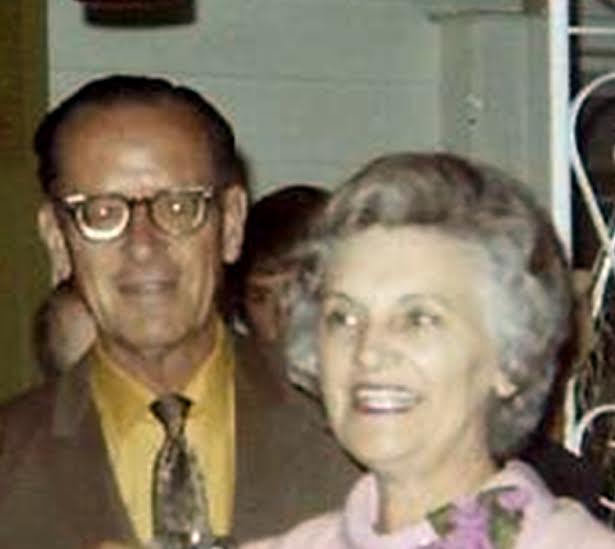
​My dad sang in the choir at First Methodist Church in Santa Monica from the early 1950’s until they retired in the late 1970’s; mom was also well known there for her leadership in the Women’s Society, on the church board, etc. It was a great choir. The organist, Tom Harmon, for example, was the chair of the Music Department at UCLA.

I started playing clarinet in third grade at Franklin Elementary School. I was usually 2nd or 3rd chair because I didn’t practice enough to be 1st chair. About the same time I started taking piano lessons with our church choir director’s wife (Lillian Swan, he was Fred Swan). Fred had picked me out in 1st or 2nd grade to do a vocal solo in church. I don’t have a specific memory of that but I recall my mom telling me when I asked about it years later that I’d done fine but didn’t’ seem to enjoy it (clearly foreshadowing being part of ensembles rather than a solo artist). A couple of years later my dad bought the family an electric organ (a Conn two manual) in addition to our piano and I started lessons with a woman named Christie Jensen – it was a great contrast to Mrs. Swan’s traditional, classical training as Christie always had me playing contemporary tunes – stuff that was on the radio. I thought that was much cooler, although Mrs. Swan was probably a better teacher. I remember the last piece I “mastered” on the piano with Mrs. Swan was “Bumble Boogie” - a boogie woogie take off of Flight of the Bumble Bee – wouldn’t attempt it today!

My sister Linda had/has a great voice so family vacations back to Arkansas, Louisiana and East Texas consisted of many days in the car (flying was still too expensive for regular folks) with hours of singing and dad teaching Linda and I about harmonizing. Mom was a good singer too so 3 and 4 part harmonies were common. It was great training (I don’t think people sing in the car much anymore).

"Bando"

At Lincoln Junior High the band director, Mr. Schwartz, convinced me to switch to bass clarinet (obviously he needed one and I was probably the only clarinet player big enough to manage the thing). I enjoyed that role – only one in the band and since I was pretty proficient he even found a couple of songs that featured bass clarinet (“Baby Elephant Walk”). I continued piano and organ through junior high as well.

​My experiences in junior high firmly cemented me as a “bando” – identifying with the music/drama/arts crowd rather than the jocks. My only spill over into that world was being one of a handful of skater/surfers.

Starting in about 5th grade, we discovered skateboarding which at that time consisted of taking an old rollerskate and bending the metal frame down so that you could screw it to the bottom of a piece of wood. Our elementary school had some excellent terrain for skating and became a haven for the dozen or so of us who took up this unusual (at the time) sport. About the same time we were also spending lots of time at the beach body surfing, and a couple of years later board surfing (when I could afford a surfboard – mine was a 9’6” Con). I was popular with the surfer crowd because mom and dad owned a big Buick station wagon and were willing to get up early on a Saturday morning and drive half a dozen junior high boys to a remote beach and leave them for the day. I loved surfing and was pretty good (a couple of years of skateboarding was a great introduction), but my eyesight started to decline and frankly I couldn’t see well enough for it to be any fun (and you couldn’t wear glasses surfing, dude!) - so I quit in my junior year of high school.

The reason I mention surfing was that “surf music” was my introduction to non-school/church musical activities. In 10th grade at Santa Monica High School (“Samohi”), I switched to tenor sax (for marching band) and also played contrabass clarinet in concert band and baritone sax in in the high school jazz ensemble – the Serenaders (great band but what a terrible name!) Anyway, surf bands were starting to form all around (Dick Dale and the Deltones, the Sufaris')and tenor sax players were hard to come by (think “Blue Moon,” "Tequila! etc.)". So about the time I quit surfing I joined a band with a guy named Wally Wulfeck (lead guitar) – honestly don’t remember anyone else in the band except for Bob Smith who also played sax – so we switched off for a while but eventually I moved on (I mean do you really need two saxes in a surf band?)

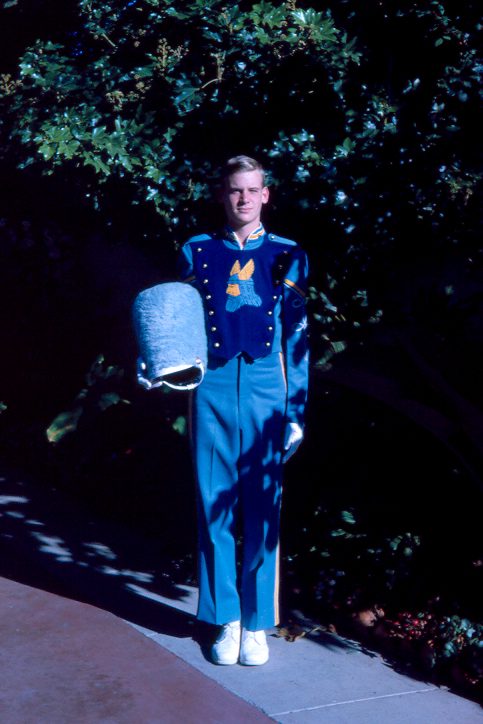
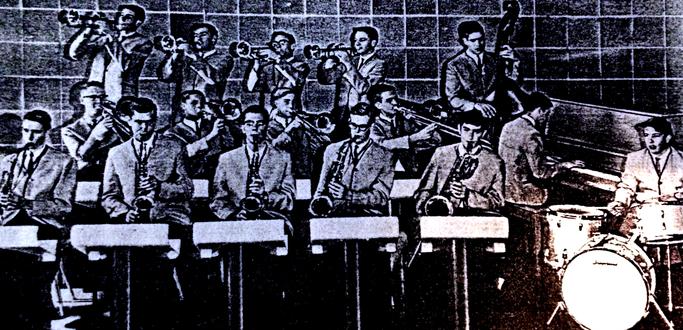
Jim Bunnell and Jim Odom were classmates of mine at Samohi and played in the marching/concert band as well as the 19 piece big band jazz ensemble (Serenaders) together. I switched between tenor and baritone sax different years, Bunnell played trombone, and Odom, trumpet. There we met upperclassman Mike Faulkner (Alto sax and clarinet) and Forrest Peques (drums). In 1964 and ’65 (my junior and senior years of high school) the Serenaders entered and won a Battle of the Bands sponsored at the Hollywood Bowl by the Los Angeles County Schools – 1965 was first prize in the big band division and in ‘64 grand prize overall against all competitors.


That's me - front row, 4th from the left playing lead tenor sax. This was the 1965 version of the Serenaders.

While we were at Samohi Jim Bunnell and I had some adventures with a grad student doing his PhD in Music at UCLA, Michael Angelo and something called the “Los Angeles Freak Orchestra” – imagine John Cage or early Frank Zappa. Angelo was the student conductor of the high school band and he invited Jim and I to participate in several “happenings” he staged. Jim and I “played” various “instruments” to small audiences. One was at the Bluth Brothers Theater in Culver City, but the one I remember most was at a church in West LA. Jim and I took the stage which contained only a stool and a rocking chair. Jim sat on the stool and I took the rocking chair. The “piece” consisted of me rocking faster and slower trying to make as much noise and as much variety of sound as I could with the rocking chair. Jim’s part was to sit with a look of deep concentration on his face until I was finished after 5 minutes or so of rocking. Then when I was perfectly still – he screamed, jumped up and ran out down the center aisle. The congregation was then led out up onto the platform and past a cardboard box with some dead fish in it.

The performance at the Bluth’s theater has lots more folks doing other stuff but to be perfectly honest I got such a bad headache from a faulty fog machine they were using, I can’t remember much of that day! Ah, art!

Southern California was a rich environment for music – we had ready access to clubs such as Howard Rumsey’s Lighthouse in Hermosa Beach (I remember being in the audience for part of the recording of the Jazz Crusader’s album “Live at the Lighthouse – ‘66”). The Troubadour in Westwood (mostly folk music), and Pandora’s and The Trip on Sunset, were part of our regular stops on any given weekend. Another example of that environment was the folks competing in the LA Schools Battle of the Bands. The years we were there also competing were to-be journeyman composer and sax player Tom Scott (“The Neoteric Trio”) and Karen and Richard Carpenter – “The Carpenters” (at the time “The Richard Carpenter Jazz Trio”).

Senior year of high school, 1965, the “British Invasion” radically changed music – surf faded and morphed into the Beach Boys, etc., so to “be cool” Jim Bunnell, Jim Odom, John Mendelsohn and I formed a band called the Fogmen (get it . . . England, fog, - only lasted one or two gigs). That summer we formed a real band, called the InRhodes.

The InRhodes

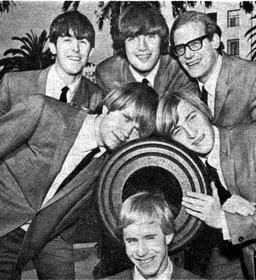
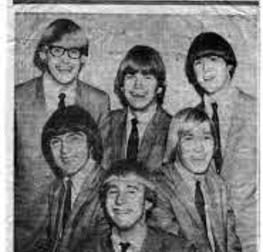
Because of our formal musical training most of the guys played at least two instruments (me – tenor/baritone sax and organ/piano), Bunnell – trombone, Odom – trumpet and guitar, Faulkner – flute, alto and tenor sax and bass). That fall we all enrolled in Santa Monica City College (SMCC) and in the marching/concert band and jazz ensemble. There we met Howard Lane who joined the group at lead guitar (played trumpet in school bands). In spring of 1966 Forrest was replaced by Dave DeFore, drummer from a rival band, “Dave DeFore and the Fugitives” and son of actor and my to-be father-in-law, Don DeFore (most well known as the neighbor on “Ozzie and Harriet” and the dad on “Hazel” although he starred in a number of movies as well).

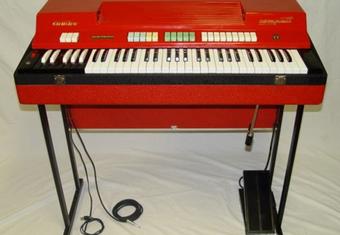
To have something to play that was portable I bought a Farfisa Combo Compact organ. It was bright red, had basically one sound (familiar to you as the organ sound on most 60’s recordings like “Double Shot of My Baby’s Love”, which you can hear my version on the “Music” page by clicking on the “Listen” icon in the upper left of the page.) It was a great instrument for my needs. It had a built-in stand which folded up into the case but when set up it was too short for me to stand and plan. I ended up building a wooden base to put it on – a bit rickety but functional. Years later I sold the Farfisa to another musician friend from SMCC band, well-known jazz flute player Tim Weisberg.


At the end of the summer we met with Wally Holmes who became our manager and co-wrote many of the band’s songs. Wally had been Odom’s jazz trumpet teacher and Junior High band director. Holmes was also a well-respected jazz trumpet player and composer. Among Wally’s other bands, a few years after the InRhodes was the Hues Corporation (“Rock the Boat”) for whom I played rehearsal piano when they were getting started.

Although we were all in school full-time (to maintain student deferments and avoid the draft) we split our time between playing local gigs and recording (hence my “D” in German 1 . . . twice!) Dave was a student at USC and a member of the FIJI fraternity, a connection which opened the door to literally dozens of USC and UCLA fraternity party gigs. Among our competitors for those gigs and occasional competitors at local battles of the bands were some well-known LA bands. Notable was our neighboring rivals from Westchester High School The Crossfires who became The Turtles (“It’s Ain’t Me Babe,” and “Eleanor”) and which included Mark Volman and Howard Kaylan (later known as "Flo and Eddie").

Summer at the Civic

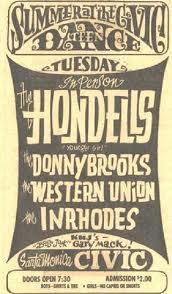
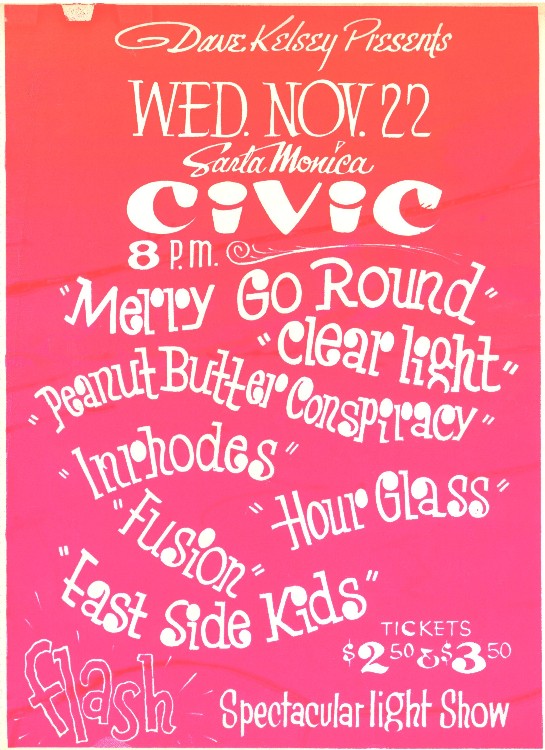
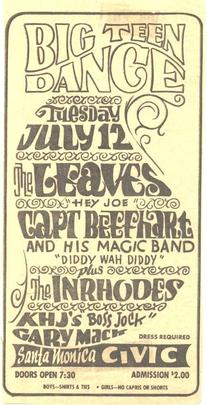
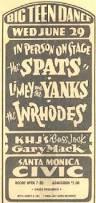
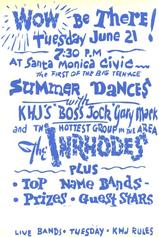
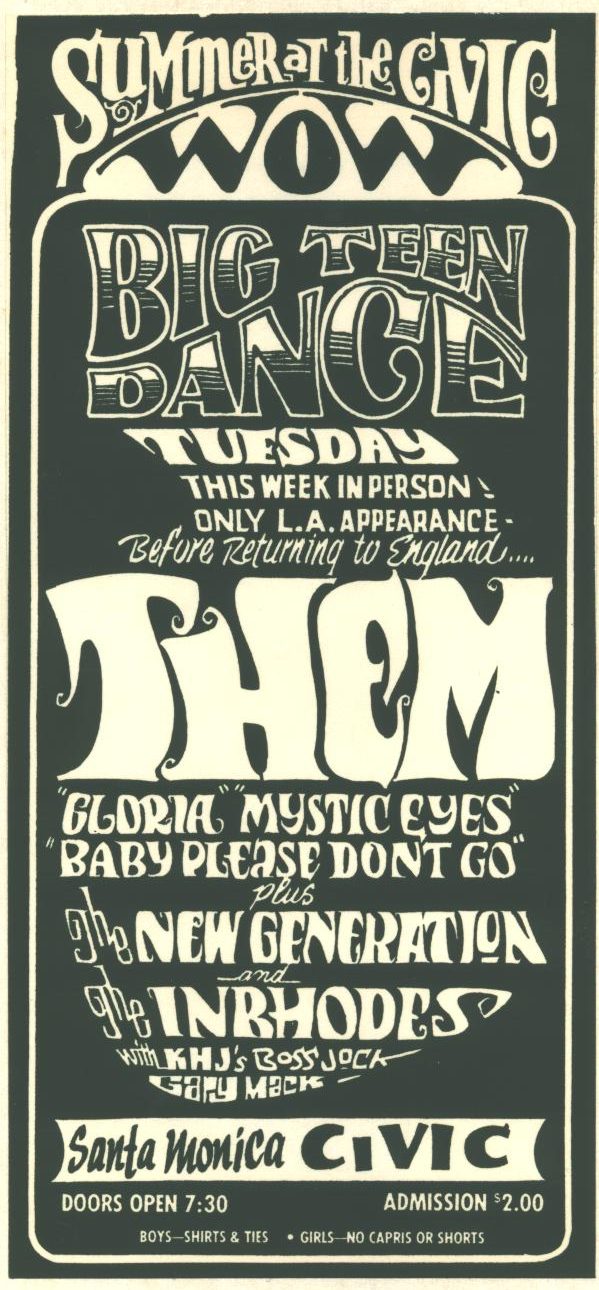
Dave Kelsey, owner of “The College Inn,” a restaurant near SMCC started producing weekly “Summer at the Civic” dance/concerts at the Santa Monica Civic Auditorium . The InRhodes quickly became not only the house band, but a major draw for the audiences. That popularity sort of backfired on Kelsey one evening (September 7th) in 1967 when he’d booked the Yardbirds, who at the time featured Jimmy Page and Jeff Beck playing dueling lead guitars! The Yardbirds mounted the stage with a row of double-stack Marshall amps (first time seen in Southern California) and turned up so loud that after a few songs the crowd literally began chanting "InRhodes, InRhodes, InRhodes" to the point where the Yardbirds left the stage. We went back on stage and finished the night (albeit at a much lower volume level!)

​Summer at the Civic was great for us – almost weekly shows with whoever the hottest touring bands coming through LA were. I can’t remember all of them, but here’s a sample:

Wally’s management created a very positive dynamic tension between our wanting to be like whatever the flavor of the month band was and his vision of the uniqueness of what we brought to the stage. So we blended typically really well done covers of top 40 songs (Beatles, Byrds, Stones, Doors, etc.) with our original material. The material, mostly co-written by Jim Bunnell and Wally or Odom and Bunnell, was also influenced by our ability to mix so many different instruments live on stage. Typically our lineup was Faulkner on bass, Odom on rhythm guitar, Lane on lead guitar, Bunnell lead vocals, DeFore on drums and me on organ. But we also did songs with either Mike or me (or both) playing sax – “Tenors Go Ahead On” was a great dueling tenors piece – I also played baritone to Mike’s tenor or alto on different songs). We also had Odom and/or Lane on trumpet, Bunnell occasionally on trombone. We usually did at least one instrumental that was all brass except for Howard on guitar and Dave on drums. It was a constant change-up that audiences really seemed to enjoy. It was like hearing the Stones, the Beatles and Chicago on one stage. Of course this was a couple of years before anybody had heard of Chicago or Blood, Sweat and Tears and the only brass you ever saw on stage was backing R&B bands like Ike and Tina Turner.


The Byrd’s influence on us was largely through Gene Clark (primary lyricist of the Byrds) who dated Howard Lane’s sister. Howard exerted a lot of influence on us to cover Byrd’s material. (Howard’s mastery of the electric 12 string guitar allowed us to do very high quality covers.) The result with audiences was really positive – pretty much anybody could cover the Stones, but few could do Byrd’s tunes well.


​Interestingly, vocally the InRhodes were even stronger than instrumentally. Everybody in the band sang although the principle leads were Bunnell and Odom. The vast majority of what we did were three or four part harmony (Jim, Jim and me or the 3 Jim’s plus Howard). Howard sang a number of songs by the Byrds, Mike, Dave and I sang specialty tunes (Dave’s was “My Baby Does the Hanky Panky,” Mike did “Little Red Riding Hood” and I did “Yellow Submarine”). One of the things we did different than most bands (besides the extra instruments) was that because of the vocal quality, rather than plugging microphones into our guitar amps as everyone did, we used a separate vocal sound system. Got lots of weird looks from other bands, but it sounded great much better, especially with all the harmonies.

Recording

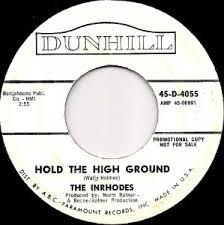
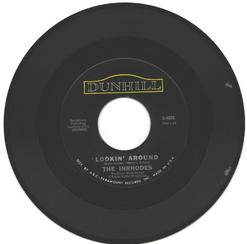
While we would have been happy to do frat parties forever, Wally encouraged us to record and stretch our abilities. Very early on we signed a contract with Dunhill Records (1966-67) and recorded a number of songs – three of which were released but didn’t make any big impact – “Try and Stop Me,“ “Looking Around” and “Hold the High Ground.” (These can be heard on the "Listen" page).

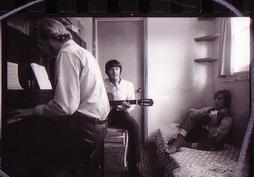
Above are some photos of 45's as well as a "from the audience perspective" of the InRhodes keyboard play (me) and finally a Future rehearsal (me on piano).

“Try and Stop Me” and “Hold the High Ground” has some really interesting and innovative musical hooks. On “Try” we were trying to use a fuzz tone (brand new toy!) to emphasize the bass part but it sounded too thin. Somebody (I think it was me) suggested splitting the signal so we sent a second line into the board (one “dry” and one with the fuzz tone). It worked great except our producer liked it so much that it’s almost all you can hear at the beginning of the song. “Hold” was unusual, . . . well it would be easier if you just listened to it! Other bands on Dunhill at the time were The Grass Roots, Steppenwolf, the Mamas and Papas, and Three Dog Night. Odom got to know the guys in the Grass Roots and that friendship continued for many years.


The contract with Dunhill was the result of us being “discovered” by Pat Boone and Norm Ratner. Yes, THAT Pat Boone. Norm, or “the rat” as we lovingly called him, had produced The Leaves hit “Hey Joe.” Oddly because we wore suits and ties (think early Beatles) and had relatively short hair we were identified as a “clean cut” band, - one that Boone not only liked in terms of our music, but our image. We performed live (well, lip-synced “Lookin Around”) on national TV in 1967 on Pat's show – the Pat Boone Show. Boone/Ratner produced our first few records.


Way too many stories to tell here so to keep it short, played at all the major clubs in LA – notably the Hullabaloo where we shared the stage with Paul Revere and the Raiders (“Kicks,” “Hungry”), the Everpresent Fullness, among others. We also played lots of special events. A frequent place we played early was Palisades High School where Dave had gone. They hosted monthly "Sports Nights" which began with just having the gym open for kids to do something on a Friday night but quickly turned into a major "west side" event when they added bands. We played there with the Doors among others. I don’t think it’s too much of a stretch to say that we were one of the most popular local bands in LA from ’66 through ‘69.


One of my favorite stories in the category of “recording” is the Gordon Jenkins story. Somehow Wally connected us up to the famous arranger/composer Gordon Jenkins. At the time Jenkins was best known for working with Frank Sinatra and Ella Fitzgerald. Gordon lived in Malibu and had just built a recording studio at his home. As I recall somehow we were going to exchange some recording time - for him to learn how to use his equipment and us to get some free studio time. Sounds reasonable eh? Anyway, we arrived at his home/studio, got set up and started getting mics and other equipment ready to go. Now I have to get a little technical. The Farfisa Combo Compact I was playing at the time had a built-in “reverb” unit. It was a “spring reverb” and hung underneath the keyboard where if you wanted to you could reach down and touch it. There would be no musical reason to do that, but if you happened to “tap” on it it makes a terrible crash sound. You’ve probably heard guitar players bang on their amps to get this sound. Anyway, it was getting boring waiting for everything to get setup, so I tapped on the reverb as a joke. Well Mr. Jenkins came running into the studio from the sound booth yelling “what did you do to my equipment??!!” He didn’t get the joke. Explanations were of no use, he hustled us out of the studio and we were not invited back. Here’s a sample of that sound.


​That summer (1969) the band split - “why” depends on who you ask, but Jim, Jim and Jim (with Wally) continuing on as a new band, “Future.”

Future

Norm Ratner continued as our producer on two other labels. In 1969 we signed with UNI Records and recorded “52%” and “The Shape of Things to Come.” Other bands on UNI at the time were the Strawberry Alarm Clock, Elton John, Neil Diamond, and Olivia Newton-John. Our last contract was with Shamley Records (1970) where we recorded our only album as “Future” – “Down That Country Road.” Singles released were “Thank You Father, Thank You Mother” and “Love Is All You’ve Got.” To listen to songs from the album click on “Listen” and go to the “Future” page (for side one) and “Down That Country Road: Side B” for the other side of the album.


​“52%” and “Shape of Things to Come” were covers of songs from the movie "Wild in the Streets." The film’s producers were lukewarm to the versions performed in the film and released by a fictional group “Max Frost and the Troopers.” The band in the movie features Richard Pryor as the drummer! Mike Deasy’s guitar work on our versions of the songs was amazing but perhaps a bit too far out for listeners at the time.


We also has some audience reaction problems with “Thank You Father, Thank You Mother” – the single Shamley selected to promote off our album. Initial great response on the radio was rapidly squashed when the PTA in Bakersfield, CA started a campaign complaining about the lyrics related to the kid in the song thanking his parents for giving him a “water pipe.” Ahead of our time, yet again . . . Anyway, “Thank You . . . “got pulled from the radio playlists and “Future’s” future was over.


The “Wrecking Crew”

We also had some great experiences in the recording studio. With both the InRhodes and Future we worked extensively with the legendary “Wrecking Crew” rhythm section. Both the new Brian Wilson movie “Love and Mercy” and the documentary “The Wrecking Crew” depict many scenes that reflected our experiences in the studio. We were very fortunate to work with the legends of the LA music scene. Among them were:

​We recorded in some of the great studios in Hollywood but spent the most time at Sunwest Recording Studios on Sunset Blvd. Our primary engineer was Donn Landee. His career went onto engineering and/or producing for Van Halen, Van Morrison, Carly Simon and the Doobie Brothers.

Weirdest Places We Played?

Well, the InRhodes played for the grand opening of an ice skating rink in Santa Monica, that was weird. They had wooden risers set up out on the ice. (1) it was REALLY cold, (2) as soon as we started playing and moving around, the risers began to separate and slide across the ice, (3) extension cords, mic and guitar cables started to disconnect. Before anything drastic happened we literally “pulled the plug” (I think we still got paid).


One time the InRhodes were a surprise “birthday present” for the wife of a psychiatry professor at UCLA. We hid in their pool house for an hour while guests arrived for her birthday party. As folks gathered and mingled around the pool, we “baked” in this closed up, dark, poorly ventilated room. When we were given the cue we threw open the doors and started blasting. I swear somebody fell into the pool but that may be a “wishful” remembrance rather than actuality.


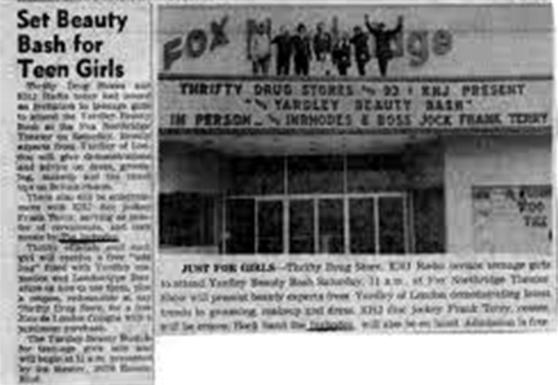
Also on my list if weird places was actually a series of events. Backstory – Yardley Cosmetics was (is, I guess) a British cosmetics firm that was breaking into the US market. Remember in the late ‘60’s ANYTHING British was cool. To promote their products, they came up with the idea of booking movie theaters on Saturday mornings when they were not being used. So the InRhodes were booked to do about a dozen of these gigs by Ratner. They used a well-known LA radio DJ – Gary Mack, as the host (we knew him well as he’d frequently hosted the Santa Monica civic gigs we’d done). They had us play after Gary got the crowd worked up, then they’d have a mini fashion show and cosmetics demo. Well, I actually don’t know what happened after we played because part of our show (the ending) was for us to drop our instruments and run out, further inciting the crowd. Now, again, remember this is 1966-67, think Beatlemania, screaming 13 year old’s (girls). So frequently when we played, we had crowds of screaming girls chasing us out of the theater and down the street – not only at the Yardley Beauty Bash’s – they were called, but at regular gigs. I remember Faulkner and me being chased into a bathroom at a junior high and a girl literally putting her fist through a wired glass window, she was pounding on it so hard trying to get in.


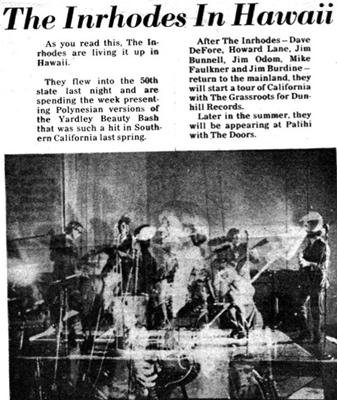
The Beauty Bash gig ended on a high note with Yardley paying us to fly to Hawaii and do a show at the Hawaiian Convention Center. Another West LA band The Association (“Along Comes Mary,” “Cherish”) was playing there at the same time (well, like the other Beauty Bash’s we were playing during the day, they had a concert at night). This was not a 300 seat movie theater; however, it was a 5,000+ seat auditorium with a VERY LOUD crowd. We had worked out an intro that had Howard hiding under the stage and us “looking for him” while we played the intro to one of our songs (“Lookin Around” – get it?) Anyway, the girls were so loud that Howard couldn’t hear when to “pop out” from underneath the stage . . . the intro went on and on. Finally he showed, Byrd glasses and Rickenbacker 12 string and all. I do remember that we didn’t get paid for the gig, they just paid for our plane tickets and hotel rooms for a week. The other memory of significance is that the hotel we were booked into had several floors rented by the University of Hawaii as women’s dorms for summer school. So we had dozens of college girls to hang out with. Oh, one more thing, my sister Linda happened to be in Honolulu staying that summer so I got to hang out with her too.


(No, your eyes are bad, this is a photo taken by the local newspaper photographer who got "trippy" by overlaying different negatives to create this image).

After "Future" Part 1

Another side to my musical experiences involved the theater. The play “FUTZ” by Rochelle Owens was about a farmer named Futz who has a love triangle relationship with his pig Amanda and the “town tart” Marjorie. At the end of the first act of the play there is a nude mud wrestling scene which in 1968 or so was bordering on illegal. A fellow I worked with at the local newspaper named Dave Sheehan (he reviewed restaurants, movies etc.) was directing and producing the play and asked if I’d play some music while folks are coming in and during intermission. The only place I could set up was in the front row, far left side, so occasionally I got a bit of mud slung on me. I think it ran for two weeks. Unfortunately timing of the nude scene and my playing during intermission didn’t allow me any backstage time when it might have been even more entertaining. One evening the pig did get out into the audience for a minute or two. Dave went on to produce other plays and TV shows, was an entertainment reporter on CBS and NBC and writer for Esquire, Playboy among other publications.


So Future ended as a result of the album going nowhere (although interestingly it has subsequently gotten some nice reviews and airplay on college stations over the years). The summer of 1970, Odom, Bunnell and I graduated from college, I got married, and the next phase of my musical history skips a few years ago to 1976 when Dawn and I moved to Chapel Hill North Carolina. I transferred there to finish my doctoral degree studying with Allan Steckler. In Chapel Hill we lived in Married Student’s Housing – a neighborhood of four-plexes about 90% graduate student families and a short walk to the School of Public Health. There I met several guys with whom I started playing music. There was an old upright piano in the “social hall” (a large room above the common laundry), and I used to go down there and bang on it to relax. A few guitar players started joining in and we developed a regular routine of jamming once or twice a week. Ed Meehan and Paul Jellinek were master’s students at the School of Public Health and the two guys I played music with most regularly. I stayed in touch with both – Paul finished a doctorate at UNC and spent many years at the Robert Wood Johnson Foundation (he also has a bar band on the side). Ed moved to Allentown, PA and became the director of the Dorothy Rider Poole Healthcare Trust. Years later Ed would be instrumental (no pun intended) in our decision to move to Allentown.


​From the time I left UNC in 1979, until 1984, my music was limited to playing a Yamaha guitar I’d picked up in North Carolina and an old upright piano we bought from our friend and fellow Tar Heel Nancy Epstein in Austin, TX (where we moved from Chapel Hill.) In ’84 we moved up the road from Austin to Temple, TX. There I fell in with a band of Scott and White health system employees – played a few gigs, mostly jammed. It was my first serious introduction to “both kinds of music – county AND western.”


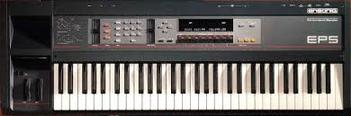
“Drop Roll and Cool” was two things – the slogan for the Burn Prevention Foundation of the Lehigh Valley, a nonprofit based in Allentown on the board of which I served, and the name of a band that Ed (Meehan) and I formed after Dawn, the boys and I moved to Allentown in 1987. I had taken a position as Vice President with HealthEast, the parent company for a group of eastern PA hospitals – now called Lehigh Valley Health Network. Ed (lead vocals and rhythm guitar), me (keyboards), Larry, a friend of Ed’s on lead guitar, and Justin on drums, organized a bar band that played together for 4-5 years. Mostly we rehearsed in our basement on Tuesday nights – the younger boys still tell stories of trying to go to sleep with Ed wailing “Honky Tonk Woman” echoing up through the air ducts. It was a good time. Our next door neighbor Bob was also a keyboard player (had a B-3 and an Ensoniq EPS sampler – very cool stuff). He was a “Yes” fan and could play stuff far more complex that I. He convinced me to buy a playback sampler (a new type of keyboard), and I found an EPS, similar to his that I bought very slightly used from a guy who wrote the user’s manual for Ensoniq – he wasn’t a player, just had been given the keyboard (to keep) as part of his contract for writing the manual. So he got pure profit and I got a keyboard that had barely been turned on.


“Drop, Roll and Cool” played lots of bars in eastern PA – a couple of weddings, etc. Had lots of fun but eventually Ed and I came to a parting of the ways over work-related stuff and the band dissolved. I think that Justin (you’ll have to ask him) really profited both musically and personally from being part of that band. Good solid music (iffy vocals), good guys, didn’t take ourselves too seriously, and lots of education around what happens to folks who spend their evenings in bars . . .


​The next part of my musical history doesn’t really involve me playing, it focuses on two other bands – “Purified” and “Audience of One.” Purified was the band Alex and Wes organized along with Steve Skekel (lead guitar) and a couple of different drummers. Purified was an opportunity for me to enjoy watching Wes and Alex really come into their own as young men, musicians and performers. Got to help them doing some recording – I think it’s some great stuff.


​Audience of One was a whole other thing . . . Dawn and I had been working with the youth group at our church (Faith Evangelical Free Church in Trexlertown, PA). Wes and Alex were in high school and their band Purified was taking off and Wes was also leading worship with the high school group at church. The junior high youth pastor, Steve Gehman, asked me what I thought about organizing a junior high (middle school actually) “praise band.” A short while later, “Audience of One” was created from an “all are welcome” recruiting call. We ended up with somewhere around 19 kids more or less regularly participating in the band. We played weekly at youth group meetings. The kids did a video of “Pharaoh, Pharaoh” (to the tune of Louie-Louie) that’s on You Tube:


​​It’s kinda hard to tell from watching but we had all kinds of brass, woodwinds, multiple guitars, 3-4 keyboard players, two bass players, LOTS of singers and for about two years had a really great time building kid’s confidence on their abilities both musically and spiritually. Still in touch with some of those kids today!

Texas

In 2001 we moved to Texas and during the first couple of years, the only music I did was at home (Dawn generously allowed me to have one bedroom for that) – and Wes and Alex, and later James, at various times lived with us and we played occasionally. “After we moved to Red Boot Ranch in the country and I took over the garage as a music room, I also started learning how to do home recording and put together a couple of CD’s of cover songs just to have some material to “learn on.” You can learn more and listen to songs from this era if you click on “Listen” and then on the “Forrest ‘n Me,” “Second Album” or “Under Construction” buttons.


In 2006 I hooked up with a new faculty member (a guy I had actually help recruit to TAMU) – a great guitar/harp player, vocalist, and front man extraordinaire – Tim Elliott. Tim has been in numerous bands, the Sandspurs was the last one before his move to Texas. Lots of You Tube videos of “da spurs” if you want to hear some.


​​Tim joined Justin, James and me (by this time James and Justin had moved to Texas), and we played on and off for a couple of years. Having young families became a conflict so Tim and I have morphed through a number of other rhythm section players. We played with some great musicians and some fun variations in style and instrumentation.


The Brazos Blues Band consisted of Tim, myself, Ryan Sheridan on bass, Steve DiMarco on rhythm guitar and Tom Bianchi on drums. Steve and Tom are/were faculty members at Texas A&M and Ryan was a doctoral student and friend from church. There are some videos of the band on YouTube although I'm not particularly happy with them. Be warned, it waw a HOT September afternoon with a single mic/video camera so you don't get a very good picture or sound! If you really wanna listen here's Mojo Workin.


Most recently played as the Brazos Valley Sandspurs with Stephen Garza and Ryan Sheridan - undoubtedly the best rhythm section I've ever played with - these guys are amazing. Gives Tim and I the freedom to really expand on what we're playing. ​


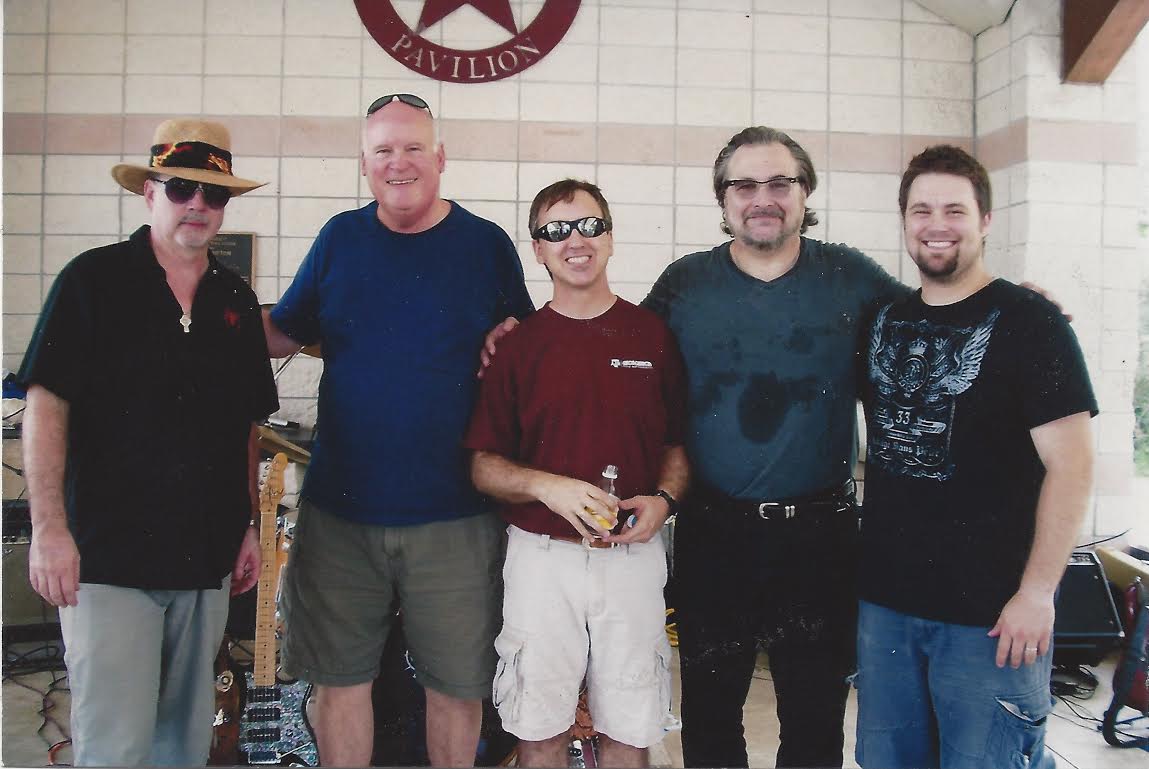
Last couple of years I’ve also started holding “jam nights at Red Boot Ranch.” Kinda of open invitation to lots of musicians to come and “sit in.” Probably done it 4-5 times a year and had some great experiences. It’s been fun to see folks moving out of their comfort zones to try different things musically and gain experience in different ensembles and formats. If I ever get any decent recordings I'll post some here.


Instruments: What Did I Play?

Horns: Besides my Selmer clarinet, bought in 3rd grade (thanks mom and dad) I bought a Selmer Mark VI tenor sax in high school (1963). Later on son James played it in high school. I ended up selling in 2005 – it had become a hard-to-come-by classic sought by professional jazz musicians.


Keyboards: Earlier I mentioned my Farfisa Combo Compact – a single manual transistor-driven organ. Had that from 1965 to 1970.

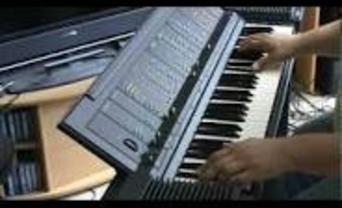
In the early 80’s played a Yamaha PS 6100 keyboard. (1984-92). The "flip top" was cool.

Ensoniq EPS performance sampling keyboard. Purchased in 1989, still have but only crank it up every couple of years.

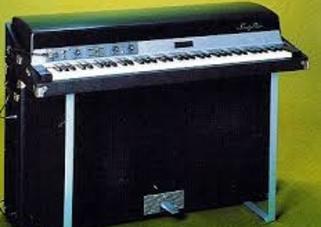
​ In about 1999, I also purchased Fender Rhodes electric piano. 1973 Suitcase Model. Very Sweet.

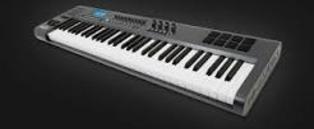
​ In 2005 I switched to an entirely midi-driven set up - an M-Audio Axiom 61, and an M-Audio Keystation 88.

​I run Ableton Live 9.0, Reason 8.3 and DB-33 on a Macbook Pro.


Family, Reunions and "Through the Years"

So I’ve had a couple of requests to tell the story of how Dawn and I met. Since that’s “all about the music,” I guess I’ll include it on this website as well!

The summer of 1966 the InRhodes were playing weekly as the house band at the Santa Monica Civic Auditorium for Dave Kelsey’s “Summer at the Civic” venue. (I’ve written more about this on the “Summer at the Civic” page). Anyway, David DeFore had been playing drums with us for a few months and one evening his sister Dawn, who had been away at college in Northern California, came to “hear her brother’s band.” After the show I asked Dawn to go out for coffee. Four years later, we were married. So while our sons love to tease her about being a “groupie” that wasn’t really the case. There were lots of them, but only one of her.

Where the story gets interesting (at least to me) is that my family and the DeFore’s had been attending the same church for a number of years yet Dawn and I had never met. We belonged to very different social strata – my dad was a union printer and Don DeFore, well, was a movie and TV star; among a small group of celebrities attending that church. I was active in the church youth group, the DeFore kid’s weren’t. My sister Linda and I went to Santa Monica High School, the DeFore’s were at Palisades High School (site of the “Sport’s Nights” at the InRhodes played many times). But, because of mom and dad’s status at church (see Chapter 1: "The Early Years"), we were brought into contact with the DeFore’s more than one might imagine.

For example, the DeFore’s lived on a gorgeous piece of property in Mandeville Canyon. They started offering the church use of the property to hold an annual church fundraiser fashion show. Mom, of course, coordinated the fashion show and hence Linda and I (and dad) were all in attendance. The DeFore’s also held a giant Fourth of July party to which my parents, Linda and I were invited. Years later going through Defore family photos, we found numerous photos of “Jimmy Burdine” at fashion show and Fourth of July events. Even more strange is that Dawn and my sister Linda sang in a trio together at church which used to rehearse at our house in Santa Monica. Again, I’m sure I was around but somehow missed out on meeting Miss Dawn until the right moment!


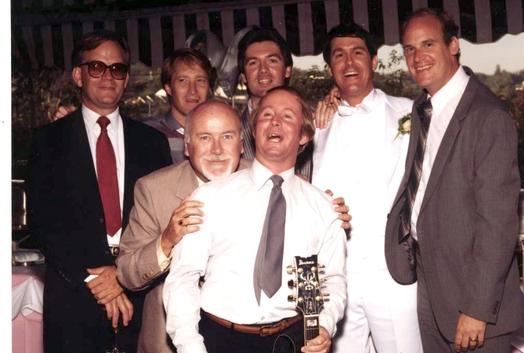
In 1984 the Summer Olympic Games were held in Los Angeles. At the same time, the InRhodes gathered for a reunion performance at drummer Dave DeFore's wedding.


Pictured here (left to right) are Mike Faulkner, Jim Bunnell, Jim Odom, Dave (nice tux!) and me. Wally Holmes and Howard Lane are in the front row.


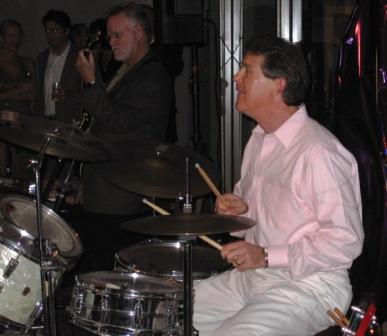
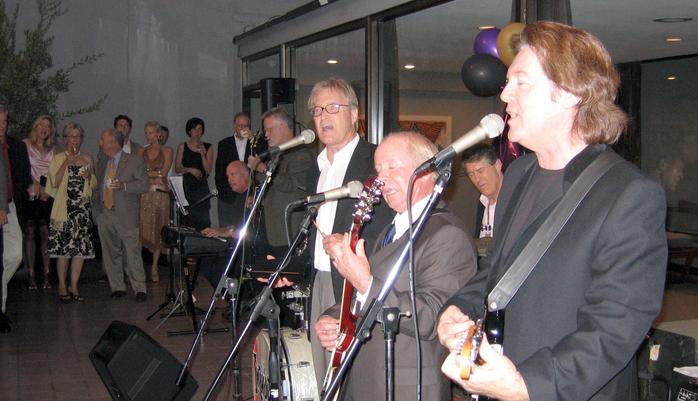
The InRhodes also played at Dave's 60th birthday party!


Playing left to right - me in the distance, Mike Faulkner, Jim Bunnell, Howard Lane, DaveDeFore, between Howard and Jim Odom.


A couple of years ago for Wally Holmes' 80th birthday The InRhodes got together again. A video of a few of the songs is visible here. Performance is a bit rusty and sound isn't great, but enjoy anyway.


Family Music

Previously I’ve mentioned that sons Alex and Wes played with a band called “Purified.” One of my favorite songs from their album “Speaking is Easy” is “Speaking is Easy.” Wes and Alex are still active musically. Alex leads worship occasionally at their church as does Wes at his church. Wes also plays with “Gospel Machine” based out of Minneapolis. Click on their name to go to the Gospel Machine website where you can find audio and video to listen to/watch (but don't forget to come back!) Wes has also recorded with Small Cities and has a couple of solo CD’s. Unicorn Rock is his children’s album and I particularly like “Wake UP!".

I’ve also previously mentioned brother-in-law David Defore, drummer with the InRhodes. Until his recent relocation to Colorado, David occasionally played with various jazz trios and quartets around the LA area. My other brother-in-law Ron DeFore was well known in the surf band days in LA for his lead guitar work. When I was putting this together Ron reminded me that he’d done some recording a few years later with Donny Most (Ralph Malph on Happy Days) “trying to sing” as Ron put it. Also Michael Botts (Bread drummer), Ron Brown (Motown bass studio musician), and the Happy Days Assistant Director, John Lenox on keyboard. It’s called “Nashville Sneakers.”

My nephew Elliott Peltzman (sister Linda’s second son) is the only full-time musician in the family (that I can think of.) Elliott plays keys (of course) with the Stone Foxes. Dawn and I had the chance to see them live last year in the Woodlands. Great band, excellent musicians and performers. Go see them if you have the chance, they’re touring most of the time.

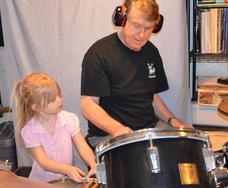
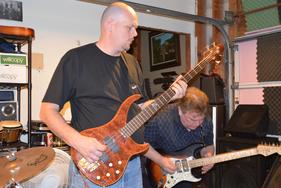
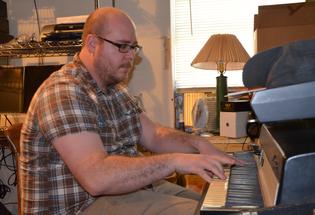
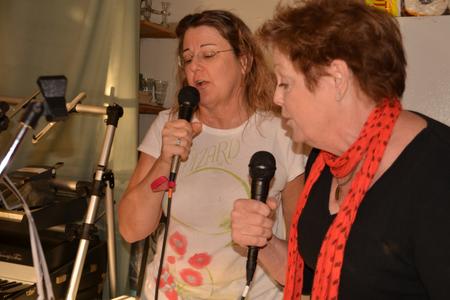
Dawn's last significant birthday was also celebrated musically. Pictured below are youngest son Wes, David (getting lessons from my granddaughter Larkin), eldest son Justin (Larkin's dad) and brother-in-law Ron DeFore, #3 son Alexander on the Fender Rhodes, and Autumn Moore (Dawn's youngest sister) and, of course, Miss Dawn.